
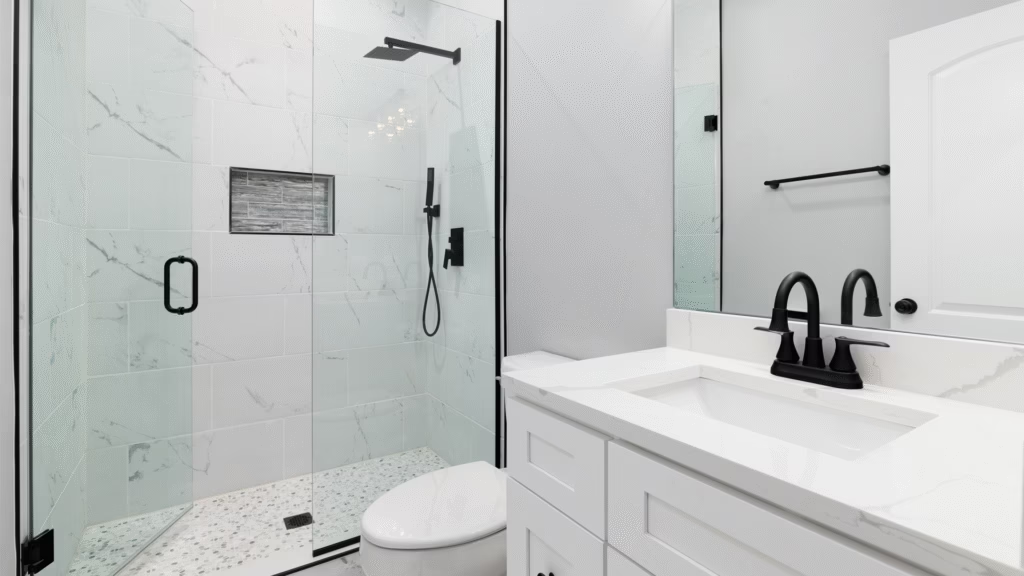
Does a tub to shower conversion require a permit? Under the statewide Uniform Construction Code, an ordinary repair does not require a permit, so a shower set on the tub’s existing drain and valve often needs none. Moving the drain, adding supply lines or opening a structural wall changes that answer, and your township has the final word.
Who decides if a permit is needed in Central PA?
The state writes the rules, but your borough or township applies them. Cornell Law’s copy of the state residential permit rule spells out the core idea: before you alter a home’s plumbing system, you apply to the building code official, unless the work is an ordinary repair. That code official in question works for your municipality, not for the county or the state.
That local layer matters, because neighboring towns word their guidance differently. Lower Allen Township’s permit guide lists swapping out plumbing fixtures among interior work that needs no permit, as long as there are no new mechanical, electrical, or plumbing installations. The same page also says a plumbing permit is required for any plumbing work. Read together, those lines show why a two-minute phone call to the township beats a guess.
So a homeowner in Mechanicsburg asks the borough office, a homeowner in Camp Hill asks Camp Hill, and a homeowner just outside Harrisburg asks Lower Paxton or Susquehanna Township. Same project, different desks.
Which parts of a tub to shower conversion can trigger a permit?
A tub to shower conversion can be a near swap or a real rebuild. The permit question tracks how far the new shower departs from the old tub.
Moving the drain
Tub drains sit at one end of the tub. Plenty of walk-in shower layouts work fine with the drain right there, but some designs want it centered or moved toward a new entry. The state code says adding to or relocating drainage piping is not an ordinary repair, which puts a moved drain on the permit side of the line. Oatey’s guide to tub-to-shower conversions calls drain relocation complex and costly, so keeping the drain where it already sits is often the simpler path all around.
Changing the valve or water lines
Replacing a worn valve in the same spot is the kind of work many townships treat as fixture replacement. Running new supply lines to add a second shower head, move the controls to the entry side, or add a body spray is new plumbing, and that is when a plumbing permit comes into play.
Opening walls or changing the floor plan
Cutting into a load-bearing wall or removing a structural support is also outside the ordinary repair category in the state code. Widening the alcove, adding a partition wall, or reframing a window that sits inside the old tub surround are all good reasons to ask the township before demolition starts.
Wiring for fans and lights
A new exhaust fan circuit or recessed light over the shower is electrical work. Ask about it in the same call, because it can carry its own permit even when the plumbing side does not.
Why do older Central PA homes change the answer?
Opening the wall behind a tub in an older house can turn a simple swap into a bigger job. Think of a Harrisburg rowhouse whose bathroom was fitted upstairs long after the house was built. Behind that tub, you may find aging supply pipes, an old drain line, or framing that has settled over a century. Fixing what you find can move a job from fixture replacement into new plumbing.
Ranches and split levels from the fifties on, common in the townships around Harrisburg such as Lower Paxton, tend to have a standard tub alcove, where a shower base can often land on the existing drain. That is the layout where a conversion is most likely to stay an ordinary repair.
Who pulls the permit, you or your contractor?
In practice, the contractor doing the work usually applies, since the permit covers their work and the inspector will want to talk to them. Ask about it before you sign anything, and get the answer in writing in the contract.
It is also worth checking that the company is registered with the state. The state Attorney General’s contractor registration page explains which home improvement contractors must register, and it links to a search tool where you can look up a registration number.
A few questions to raise with any contractor:
- Will the drain stay where it is, or move?
- Are any new water lines being added?
- Is any wall being cut, removed, or added?
- Who contacts the township, and who meets the inspector if one is needed?
Bring those questions to a free in-home consultation, with the drain, valve and walls right in front of you.
On one shower conversion, we started with a planning consultation that walked the homeowners through each project decision and the design. Install day went smoothly. The finished shower conversion turned out truly beautiful.

Planning a conversion for next year?
Late fall is a natural time to look at the guest bathroom with fresh eyes, especially after a few holiday visitors have stepped over a high tub wall. If you are thinking about a shower installation in that room next year, use the quiet weeks of winter to sort out the permit question first. Call your township, describe whether the drain or walls will move, and write down what they tell you.
Signature Home Worx is owner-led, and most bathrooms are finished in one to two days once the planning is done. For a look at your own tub and what converting it would involve, contact Signature Home Worx to set up a free in-home consultation.