For walk in shower vs tub resale, the answer depends on how many tubs the house keeps. Swapping a tub for a walk-in shower rarely hurts resale when another bathtub stays somewhere in the home, but removing the only tub can narrow the buyer pool, especially for young families. Here is how that plays out in Central PA houses.
Does replacing a tub with a walk-in shower hurt resale value?
Agents and designers do not fully agree, and their disagreement is useful. In NAR’s REALTOR Magazine article on bathtubs and resale, a Nashville designer and stager argues that a home with no tub will hinder a sale to most buyers. A Chicago designer in the same piece sold her own house without a tub and did not think it hurt the value, because the showers were very nice.
Both views point to the same rule. Buyers do not object to a walk-in shower; they object to a house with nowhere to bathe a toddler or soak a sore back. The same article notes that many parents consider a traditional tub safer than a shower for small children, which is why young families are the group most likely to walk away from a tubless listing.
So the question is rarely "tub or shower." It is "which bathroom gets the shower, and does a tub survive somewhere else?"
How many homeowners are actually removing their tubs?
Plenty, and most of them do it the careful way. Houzz’s survey of master bath renovators found that 27 percent decided to remove the master bathtub, most often to make room for a larger shower. The detail that matters for resale: 78 percent of the people who removed it still had another bathtub in the home.
That pattern is the safe middle ground. The bathroom you use every day gets the roomy, low-step shower, and the hall or kid bath keeps a tub for the next owner who needs one.
Which tub should you convert in a Central PA home?
The answer depends a lot on when your house was built, and the housing stock here varies more than people expect. Using Census estimates, the Central Penn Business Journal’s look at midstate housing age reported that 63.8 percent of homes in Cumberland, Dauphin, Lancaster, Lebanon and York counties were built before 1980. Cumberland County’s busiest building decade was the 1970s, at 15.5 percent of homes, while Dauphin County’s was the 1950s.
Two or more full baths
Many split-levels and colonials from that decade around Mechanicsburg and Camp Hill have a hall bath with a tub and a smaller primary bath with its own tub and shower combo. That primary tub is often the one nobody uses, and it is the easiest one to give up. Convert it to a walk-in shower, keep the hall tub, and a future buyer with kids still sees a place for bath time.
One full bath
The harder case is a house with one full bathroom: a Harrisburg rowhouse with a single bath upstairs, or an older ranch in the townships. Here the tub is also the last one in the house, so you are weighing your own daily comfort against a larger buyer pool. Three reasonable paths:
- Keep a tub, but update it. Tub replacement swaps a worn, chipped tub for a new one and leaves the bathing option intact.
- Convert anyway, if you plan to stay for years. Your safety today is worth more than a guess about a buyer a decade out.
- Look at the buyer you are likely to sell to. A one-bath ranch often appeals to downsizers more than to growing families, and Pennsylvania is getting older: PSATS’s summary of Census data puts 21 percent of the state’s population at 65 or older.
What makes a walk-in shower add appeal instead of subtracting it?
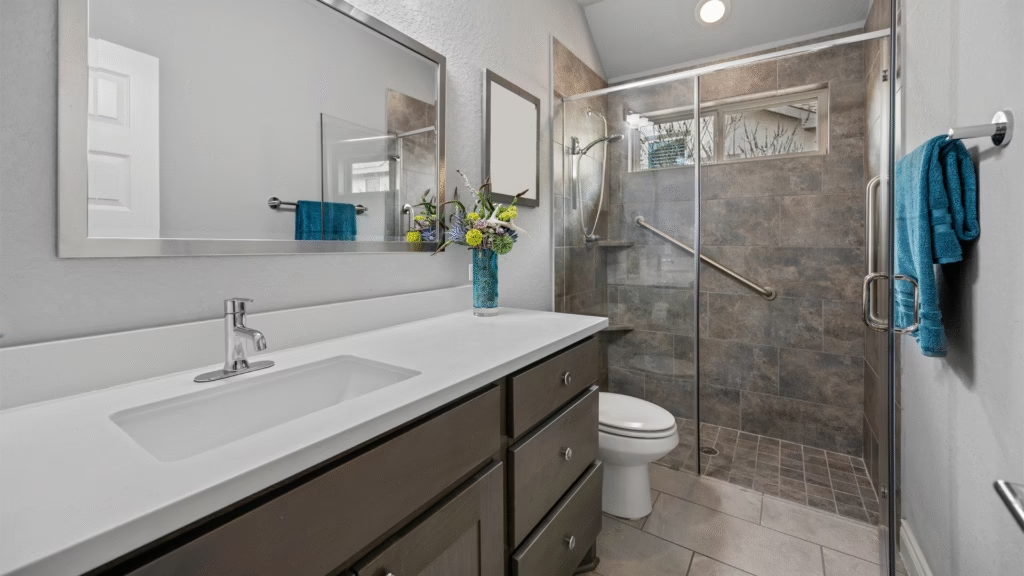
A shower that replaces a tub has to look like an upgrade, not a compromise. Buyers notice cramped stalls, dated fiberglass and stained grout. They also notice a wide glass entry, a built-in seat, and walls that look new years later.

Our tub to shower conversions use walls of non-porous engineered stone, which leaves no grout lines for mildew in a humid summer bathroom. A few features also tend to read well to almost any buyer:
- A low-barrier or barrier-free entry, which suits older buyers without looking clinical
- Built-in shelving niches instead of caddies on the rim
- Clear glass that keeps a small room feeling open
- Grab bars placed where they help and finished to match the fixtures
On one job, we came to the house to give an estimate on converting an old tub to a shower. We walked through the options for the space. The install went smoothly.
If the room needs more than a new shower, such as a new floor, vanity or layout change, a full bathroom remodeling project can handle both at once.
Is a walk-in shower worth doing before holiday guests arrive?
For many families this is the real deadline. October is when parents and grandparents start booking trips for Thanksgiving and the holidays, and the guest bathroom becomes the room everyone worries about. A tall tub wall in the one bathroom a visiting parent will use is the step most likely to cause trouble, and it is the easiest one to remove.
A conversion is also a short job compared with a full remodel. We replace an unused tub with a walk-in shower, most in one to two days, so the bathroom is back in use quickly. If resale is part of the plan, pick the bathroom to convert with the earlier sections in mind: convert the one your guests and your own knees will use, and keep a tub elsewhere if the house has one to keep.
How do you decide for your own house?
Count your tubs, think about who buys homes on your street, and be honest about how long you plan to stay. If you keep at least one tub, the walk-in shower is very likely a gain. If it is your only tub, weigh your daily comfort against a narrower resale pool.
Every house in this area is different, from city rowhouses to suburban split-levels, so the real cost and the right layout come from a free in-home consultation. Contact Signature Home Worx to set one up and talk through which bathroom makes the most sense to convert.